 How-to
How to Photograph Active Dogs Outdoors: Practical Tips
Last Updated: November 22, 2026
Quick Summary
To photograph active dogs outdoors, shoot during the soft light of the first hour after sunrise or the last hour before sunset, with the sun behind or beside you. Use continuous autofocus, a high burst rate and a shutter speed of 1/1000 to 1/2000 sec for fast running. Choose a simple background and a location with room to run.
- Shoot in the first hour after sunrise or the last hour before sunset for soft, warm light.
- Use a shutter speed of 1/1000-1/2000 sec for a full sprint toward the camera.
- Set continuous autofocus with a zone or wide focus area rather than a single point.
- Fire short bursts of one to two seconds to avoid filling the buffer with near-identical frames.
- On an iPhone, tap and hold the dog's eye to lock focus and exposure before the action starts.
Table of Contents
- Choosing the Right Light, Time, and Location for Outdoor Dog Photos
- Camera Settings for Dog Action Photography
- How to Take Good Dog Photos on an iPhone
- Booking a Dog Photography Session With Your Pet Included
- Frequently Asked Questions
Choosing the Right Light, Time, and Location for Outdoor Dog Photos
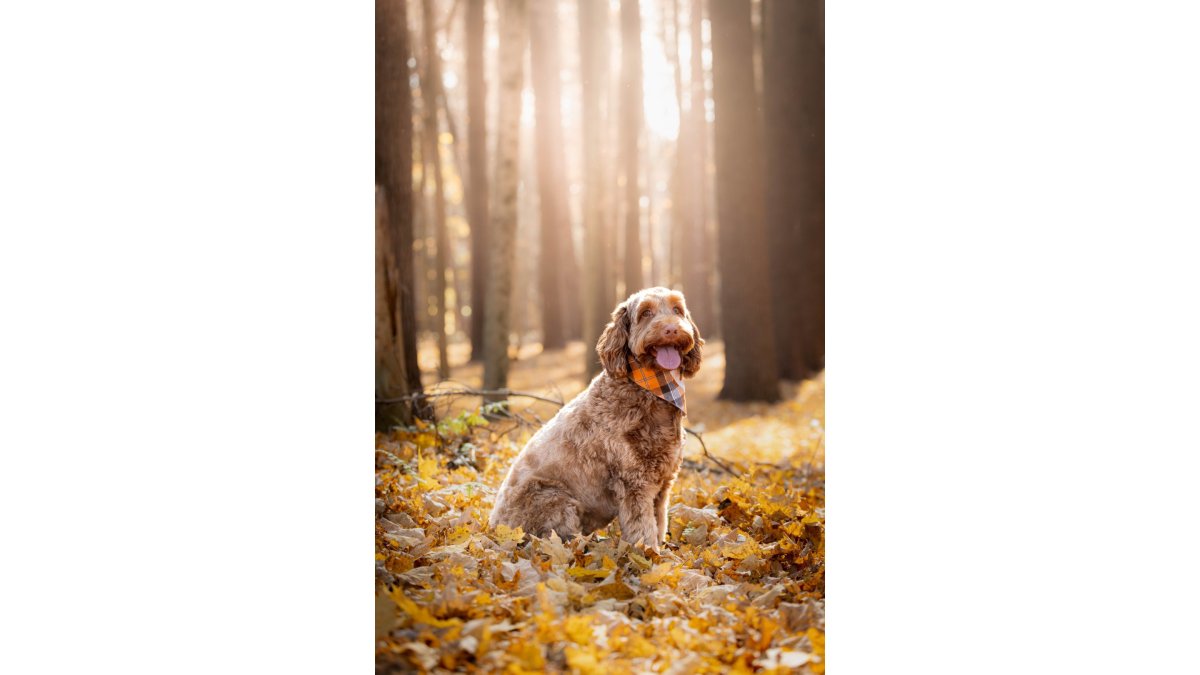
Good light matters more than any camera setting when you photograph an active dog outdoors. Shoot during the first hour after sunrise or the last hour before sunset, when light is soft and warm; harsh midday sun creates deep shadows and squinting eyes (Beginner's Photography Guide (U.S. National Park Service)).
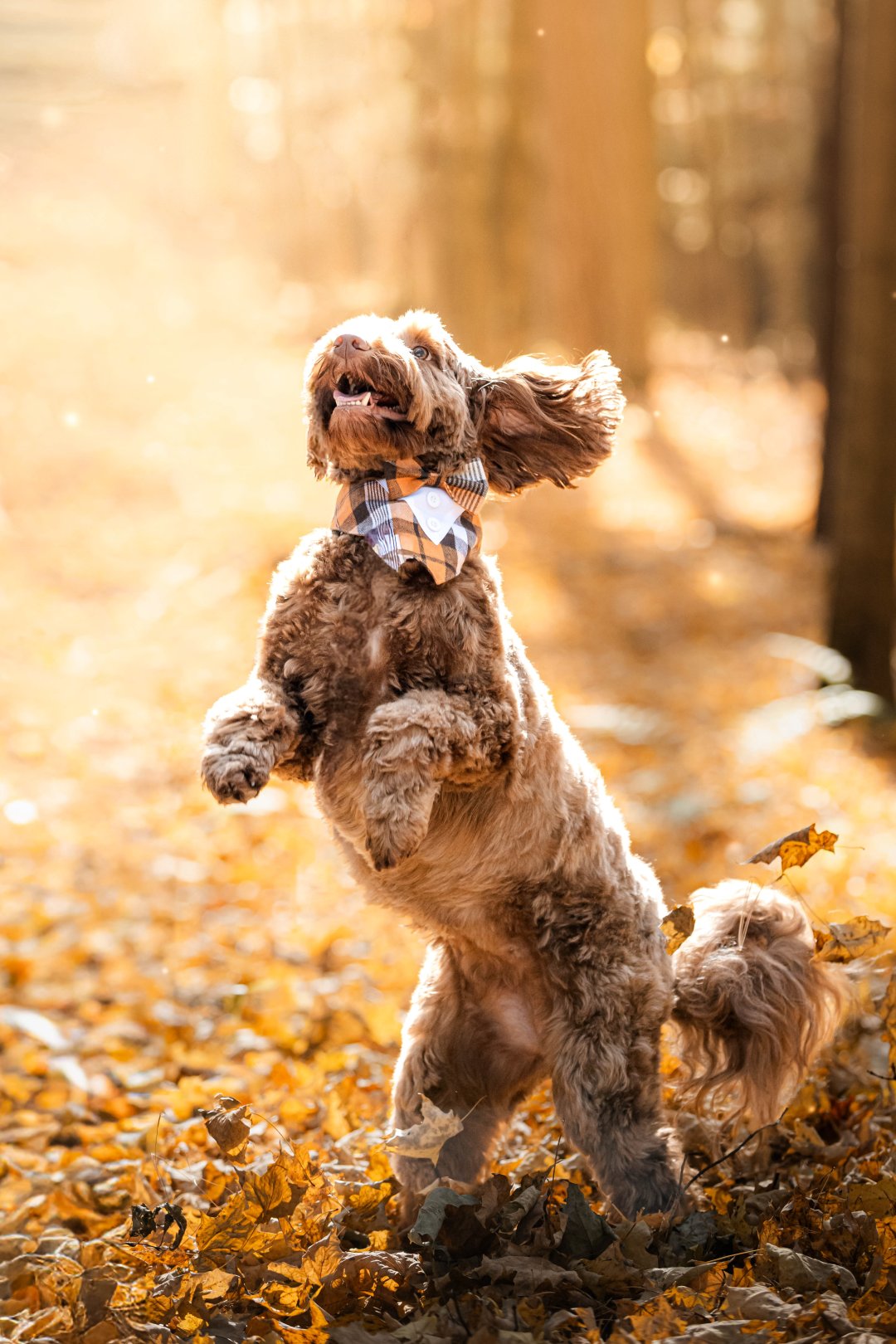
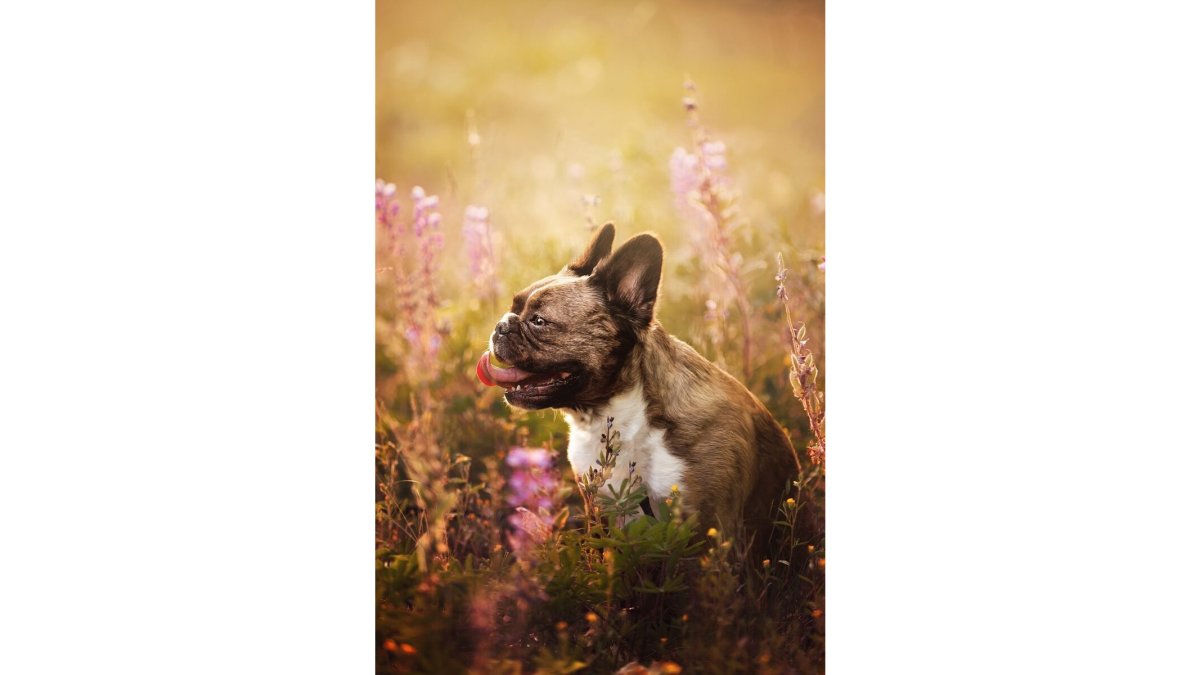
Position yourself so the sun sits behind you or to the side, so light on the dog's face shows detail in the eyes and fur. Backlighting can look dramatic but often hides the face unless you adjust exposure.
Pick a simple background, open fields, tree lines, soft greenery. Busy spaces with fences, cars, and people pull focus away.
A location with room to run gives you more natural movement and better expressions when you photograph active dogs outdoors.
Camera Settings for Dog Action Photography
Action settings are not one recipe. Use the table below as a baseline, then adjust based on what you see on the back of the camera.
| Movement | Shutter speed | Aperture | ISO | Autofocus | Burst |
|---|---|---|---|---|---|
| Full sprint toward camera | 1/1000-1/2000 sec | f/4-f/5.6 | Auto, max 3200-6400 | Continuous, subject/animal detection if available | High (8-20 fps) |
| Jumping or catching a ball | 1/1250-1/2000 sec | f/4-f/5.6 | Auto, max 3200-6400 | Continuous with wide or zone area | High |
| Trotting, sniffing, calm moments | 1/500-1/800 sec | f/2.8-f/4 | Auto, max 1600-3200 | Continuous or single | Low to medium |
Start in shutter priority (S or Tv) so the camera picks aperture and ISO. Once you know how your camera behaves in a given light, switch to manual with Auto ISO and lock shutter and aperture yourself for consistent exposures across a burst.
Use continuous autofocus and turn on animal or subject detection if your camera offers it. Set the focus area to zone or wide rather than a single point, a running dog crosses a single point too quickly.
Burst rate matters more than most people expect. A 20 fps burst is often the difference between a mid-stride frame and one where all four paws are off the ground. Fire short bursts of one to two seconds rather than holding the shutter down; long bursts fill the buffer and produce hundreds of near-identical frames to cull.
Watch out: if your frames are soft but the dog is in focus, your shutter speed is too slow for the dog's speed and direction, bump it up before you touch anything else.
A repeatable workflow beats random firing. Before the action starts, pick your spot, pre-focus on where the dog will be, set exposure, and wait. When the dog enters the frame, acquire focus and fire a short burst through the peak moment. Review, adjust one variable at a time, and repeat.
Expect missed frames. Even experienced action shooters discard most of what they capture. The goal is a handful of sharp, well-timed frames, not a high hit rate.
How to Take Good Dog Photos on an iPhone
A phone can absolutely capture a running dog, but the technique differs from a dedicated camera. The biggest wins come from locking focus and exposure, using the right mode, and getting close enough that the dog fills a meaningful part of the frame.
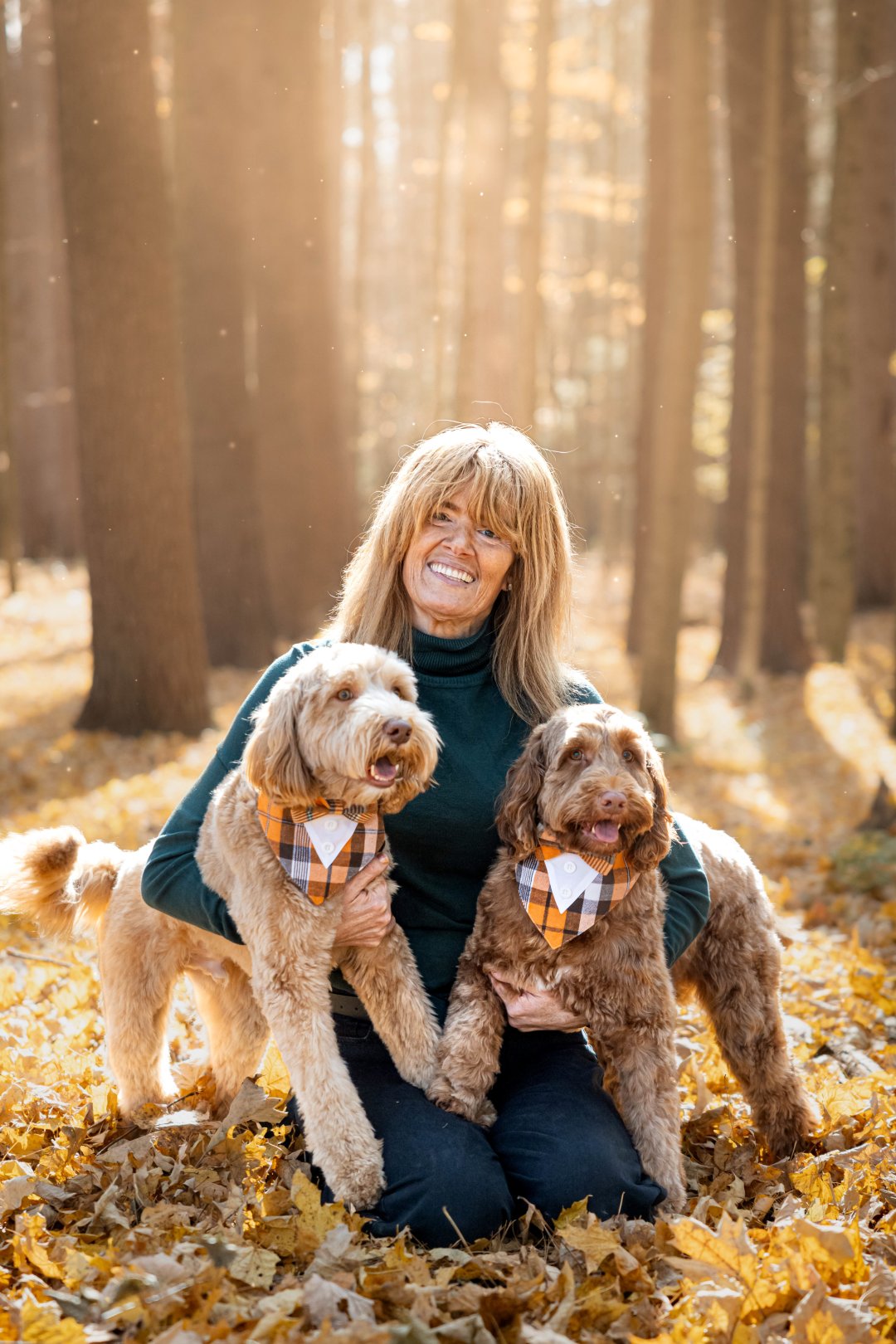
Start with the lens. The main (1x) camera has the largest sensor and best low-light performance, so use it whenever you can get close enough. The 2x or 3x telephoto helps when you cannot approach without disturbing the dog, but it gathers less light and shows more motion blur in dim conditions. Avoid digital zoom beyond the optical range, it softens detail you cannot recover later.
Lock focus and exposure before the action. Tap and hold on the dog's eye until you see the AE/AF Lock indicator, then recompose. This stops the phone hunting for focus mid-run and re-metering when the dog moves against a brighter or darker background.
Use the right capture mode. On recent iPhones, Action mode applies strong stabilization and suits fast movement, it works well for a dog running parallel to you, but it crops the frame and needs good light. Burst mode (hold the shutter or swipe left on the shutter in Photo mode) captures a rapid sequence and is the most reliable way to catch a peak moment.
Watch out: burst mode on a phone produces a lot of frames quickly, and the phone may slow down or stop capturing if storage is low, clear space before a session.
Brace the phone. Tuck your elbows against your ribs, hold it with both hands, and shoot at the dog's eye level by crouching or kneeling. A phone held at chest height looking down produces a distorted, top-down perspective that reads as a snapshot rather than a portrait.
Shoot toward the light. With the sun behind you or to your side, the dog's face is lit and autofocus locks on more easily. Backlit scenes can look dramatic, but the phone will often expose for the bright background and leave the dog a silhouette, tap and hold on the dog's face to lock exposure there instead.
Dark fur is the hardest subject for a phone. The camera tends to underexpose black and dark brown coats, losing shadow detail. Tap on the dog's face, then drag the exposure slider up slightly until you see texture in the fur without blowing out the background. Shoot in RAW or ProRAW if your phone supports it for more room to recover shadow detail in editing.
Clean the lens before every session. A smudged lens causes soft, hazy photos with flare that no editing can fully fix, the single most common reason phone photos of dogs look worse than they should.
Booking a Dog Photography Session With Your Pet Included
If you want professional results without the trial and error, a session with a documentary-style photographer can take the pressure off. A documentary-style approach lets your dog set the pace, so the photos reflect real personality instead of forced poses. Explore our outdoor dog portrait sessions in the Saratoga Springs area and nearby locations.
Ready to plan your session? Contact Kindred Canine in Saratoga Springs, NY to start the process and talk through your dog's needs.
Have questions about preparing your dog, locations, or custom artwork? Find answers on our FAQ page before you book.
Frequently Asked Questions
How do you photograph a dog that won't sit still?
Stop asking the dog to sit still. Work with its energy by using burst mode and a shutter speed around 1/1000 second to freeze movement. Keep a few treats or a favorite toy in your pocket, and let the dog run toward you on a loose leash so you capture the moment it comes in. Short, frequent sessions of 10 to 15 minutes often produce better results than one long shoot, because the dog stays engaged and relaxed rather than tired and distracted.
How do you take good dog photos with an iPhone outdoors?
Use the Burst function by holding the shutter button to capture a series of frames, then pick the sharpest one afterward. Shoot during the hour after sunrise or before sunset, when soft light flatters fur and eyes. Tap the dog's eye on screen to set focus, keep the phone at the dog's eye level, and use the 2x telephoto lens if your model has one so you can stand back without startling the dog. Clean the lens before you start, since a smudged lens is a common cause of soft photos.
Can a dog photography session include the owner?
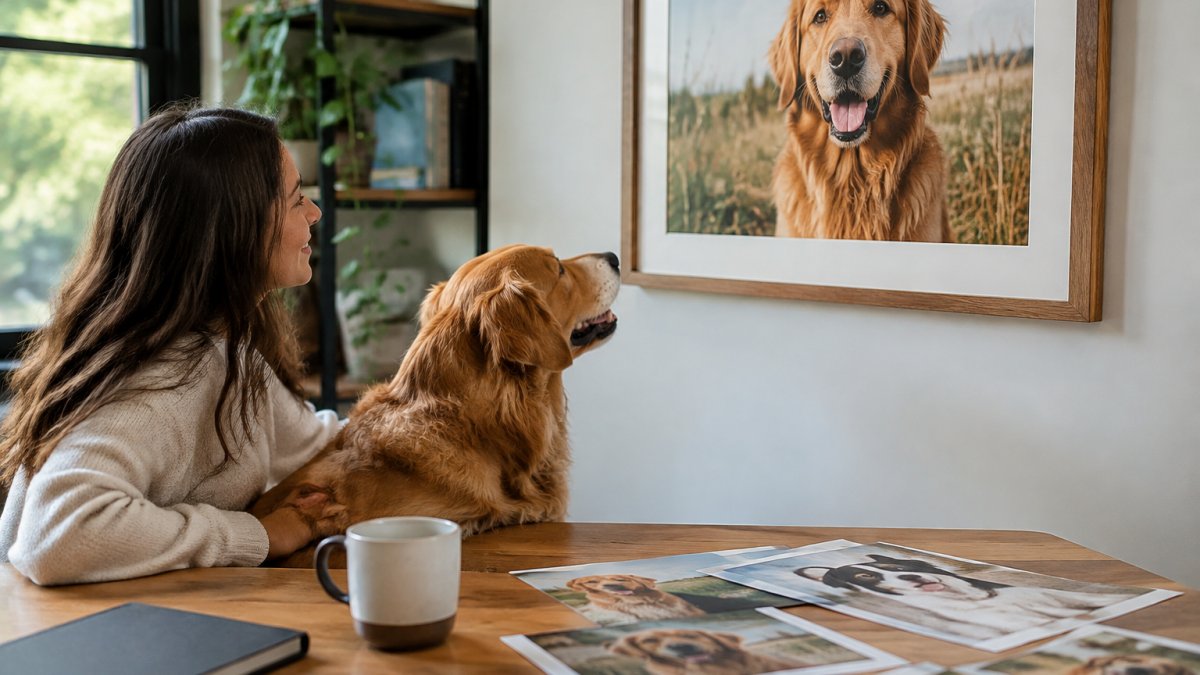
Yes. Dog photography with owner is one of the most requested setups, because the photos show the bond between the two of you. Plan the shot so the owner is part of the frame but the dog remains the focus, often with the owner walking or sitting beside the dog rather than posing stiffly. At Kindred Canine, sessions are planned around your dog's comfort and the location you choose, and pricing depends on the session details, so contact us through our website for a current quote.